
The Power of the Spectrum
In the final stage of the BSKY treatment process, ballast water enters the high-intensity Medium Pressure (MP) UV Reactor. While many systems rely on low-pressure lamps that target a single wavelength, BSKY uses medium pressure technology for a broader, more decisive biological impact.
Why does this matter? Because invasive species are resilient. Some organisms can repair DNA after exposure to weak UV. BSKY’s MP-UV delivers a “knockout blow” by attacking the organism’s entire genetic structure—ensuring they cannot recover or reproduce.
Broad Spectrum
MP-UV targets multiple biological pathways—beyond a single wavelength approach.
Compact High Power
Fewer, higher-power lamps reduce reactor size and simplify retrofit piping.
Why Medium Pressure (MP) Over Low Pressure (LP)?
1) Multi-Wavelength Attack
- Low Pressure (LP): Emits mainly a single wavelength (typically 254nm). Some hardy organisms can recover from limited-spectrum exposure.
- BSKY Medium Pressure (MP): Emits a broad UV spectrum (approximately 200–400nm), impacting DNA as well as proteins/enzymes—driving irreversible inactivation.
2) Superior Performance in Low Clarity Water
Ballast water isn’t always clear. MP lamps have higher energy density, helping UV penetrate deeper even at low UV transmittance (UVT), supporting consistent treatment in challenging conditions.
3) Compact Footprint
One medium pressure lamp can replace many low-pressure lamps. The result: a smaller reactor vessel and less installation work— ideal for tight engine rooms and retrofits.
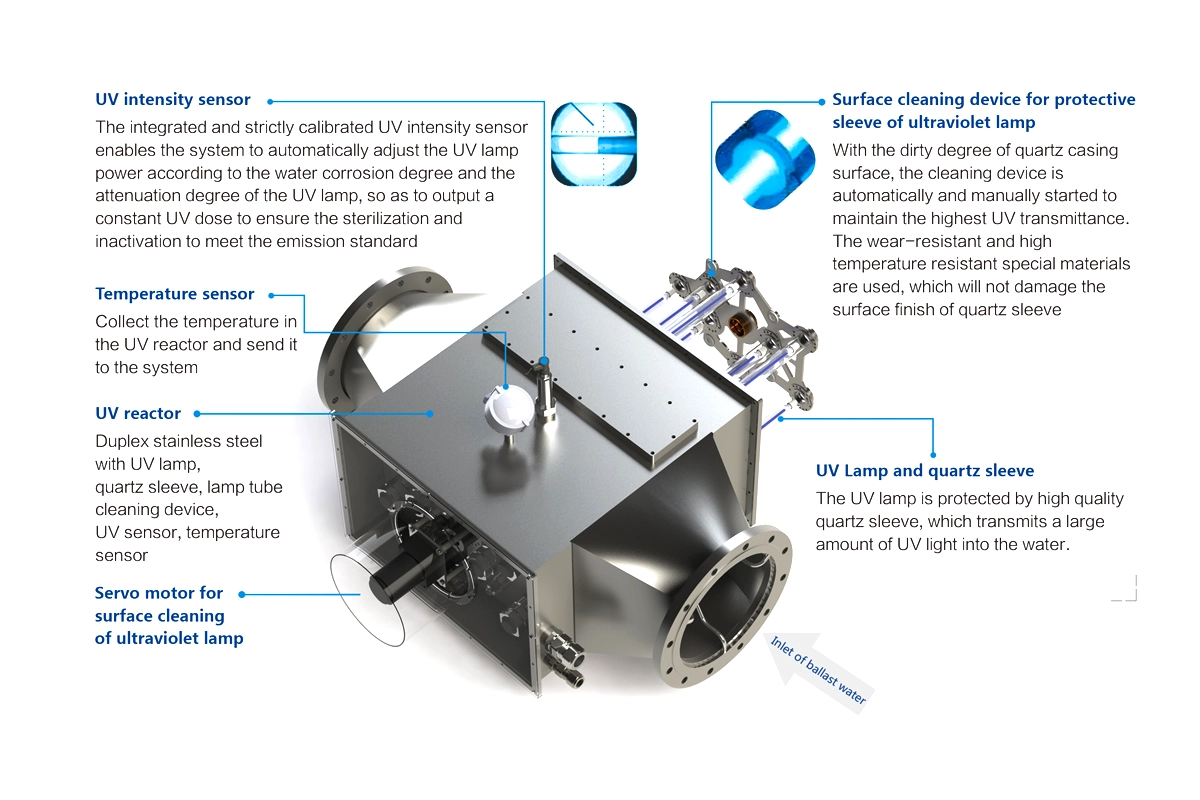
Key Features of the BSKY Reactor
- CFD-Optimized Chamber: Reactor geometry is shaped to increase mixing and exposure, bringing organisms closer to the UV source.
- Automatic Power Stepping: Lamp power adjusts based on water quality—saving energy in clear water and increasing dose when needed.
- High-Grade Quartz Sleeves: Protected by premium quartz, kept cleaner by the Ultrasonic pre-treatment stage to maintain UV intensity.
Dose Confidence
UVI feedback + power stepping helps maintain effective dose under varying UVT.
Retrofit Practicality
Smaller footprint reduces piping complexity and improves access for service.
Technical Comparison
Medium pressure design improves performance, reduces lamp count, and helps ensure reliable inactivation even in challenging water quality.
| Feature | Low Pressure UV Systems | BSKY Medium Pressure UV |
|---|---|---|
| Wavelength | Single (typically 254nm) | Broad spectrum (200–400nm) |
| Inactivation | DNA damage (more repair risk) | Irreversible genetic inactivation |
| Lamp Count | High (many lamps) | Low (few high-power lamps) |
| Space Required | Large | Ultra-compact |
| Water Quality | Struggles in low UVT | High performance across conditions |
The YAF Diesel Service Promise
UV lamps are the primary consumable of UV-based BWMS. YAF Diesel maintains strategic inventory of genuine BSKY MP-UV lamps at global hubs.
- Extended Lamp Life: Sensors and power stepping help run lamps only at required power, extending operational life.
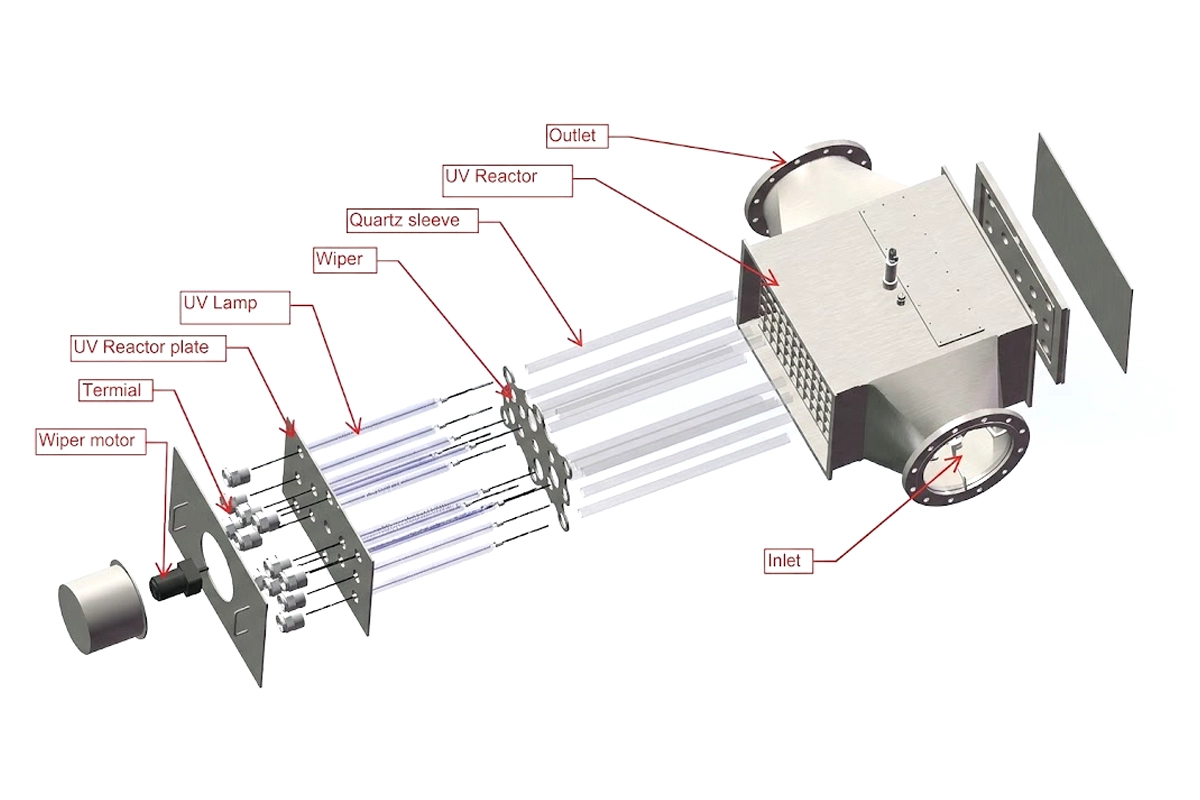
- Easy Replacement: Side-access reactor design enables quick lamp replacement without disassembling the entire unit.
Frequently Asked Questions (FAQ)
Do Medium Pressure lamps get hotter than Low Pressure lamps?
Yes. They operate at higher temperature, which is why the BSKY system includes integrated temperature sensors and a cooling flow safety switch to keep operation within safe maritime limits.
How do I know if the UV dose is enough for compliance?
The BSKY system uses a high-precision UV Intensity (UVI) sensor that monitors real-time intensity reaching the water. If the dose falls below the required threshold, the system can trigger an alarm and/or adjust operation automatically.
What is the lifespan of a BSKY MP-UV lamp?
Typically 3,000–5,000 hours depending on start frequency and power levels used. Your operating profile will influence final lifetime.
Stop fighting your filters. Start ballasting with confidence.
Request reactor drawings, lamp specs, and retrofit planning support for your vessel and route.